Arm exoskeleton
Ercura pisae
Supports the arms during overhead and raised-arm work.
€690 + VAT
Orders are open.
What it is for
For many kinds of work with the arms raised
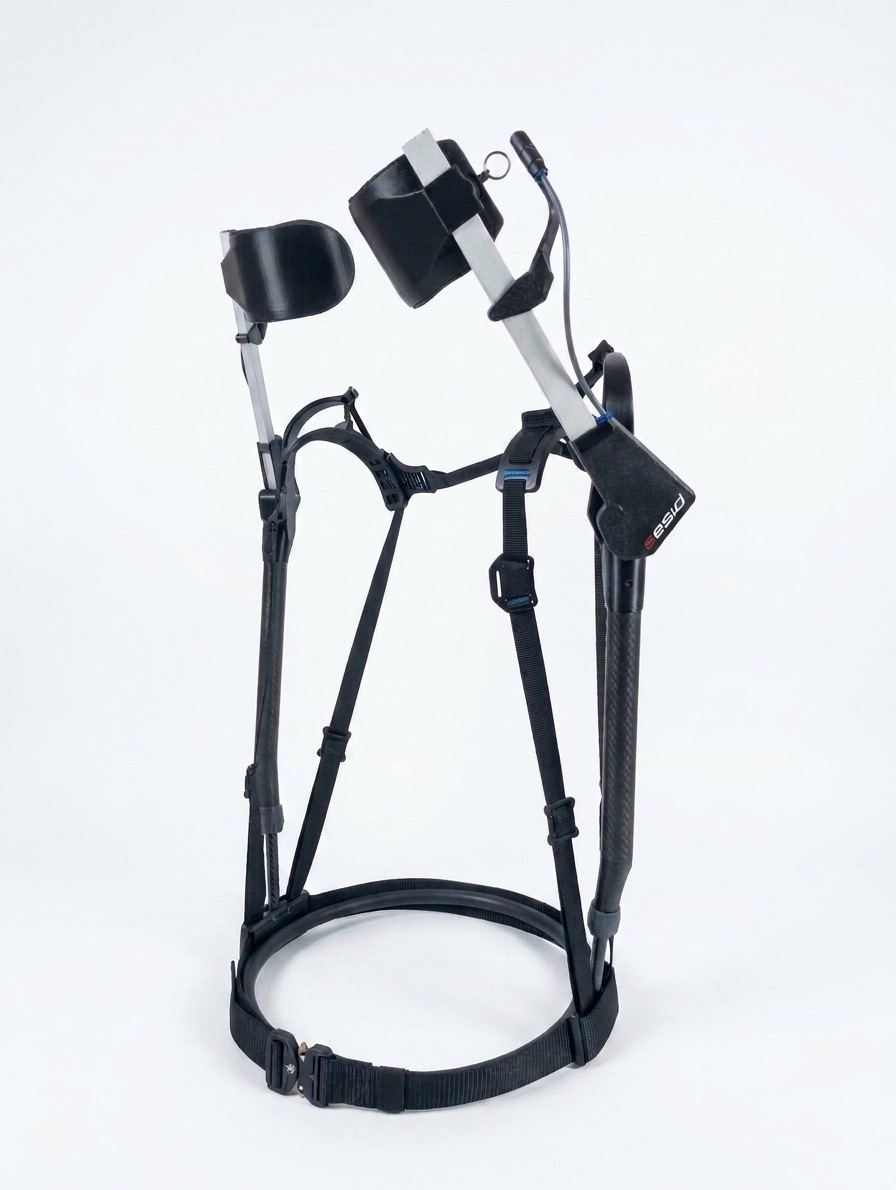
pisae supports your upper arms when you keep them raised for a long time: working above your head or at shoulder height, often with a tool in your hands.
- Building workDrilling, fixing and plastering on ceilings
- Electrical workLights, cables and cable trays overhead
- Painting and coatingCeilings, walls and machines
- AssemblyFitting parts at or above shoulder height
- Maintenance and repairMachines, equipment, cars on a lift
- FarmingPicking fruit, pruning trees, tying vines
- GardensTrimming hedges and trees
- At homeLamps, curtain rails, a ceiling to paint
Examples
Three of these jobs
Tap a picture to play. The clips have no sound.
How it works
A spring in each tube
When you lower your arm, a spring inside the carbon tube is compressed. When you raise it, the spring gives that energy back, and the cuff supports your upper arm.
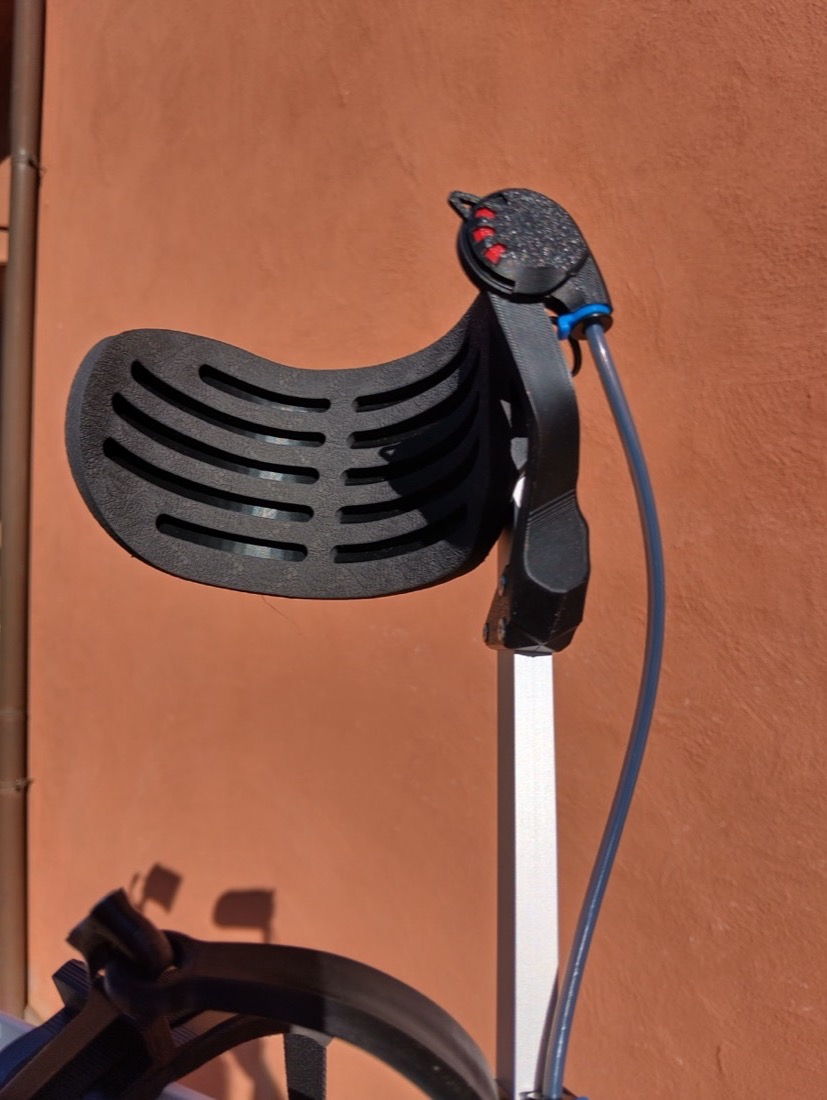
Each arm has four support levels. You set them separately with a wheel above the cuff.
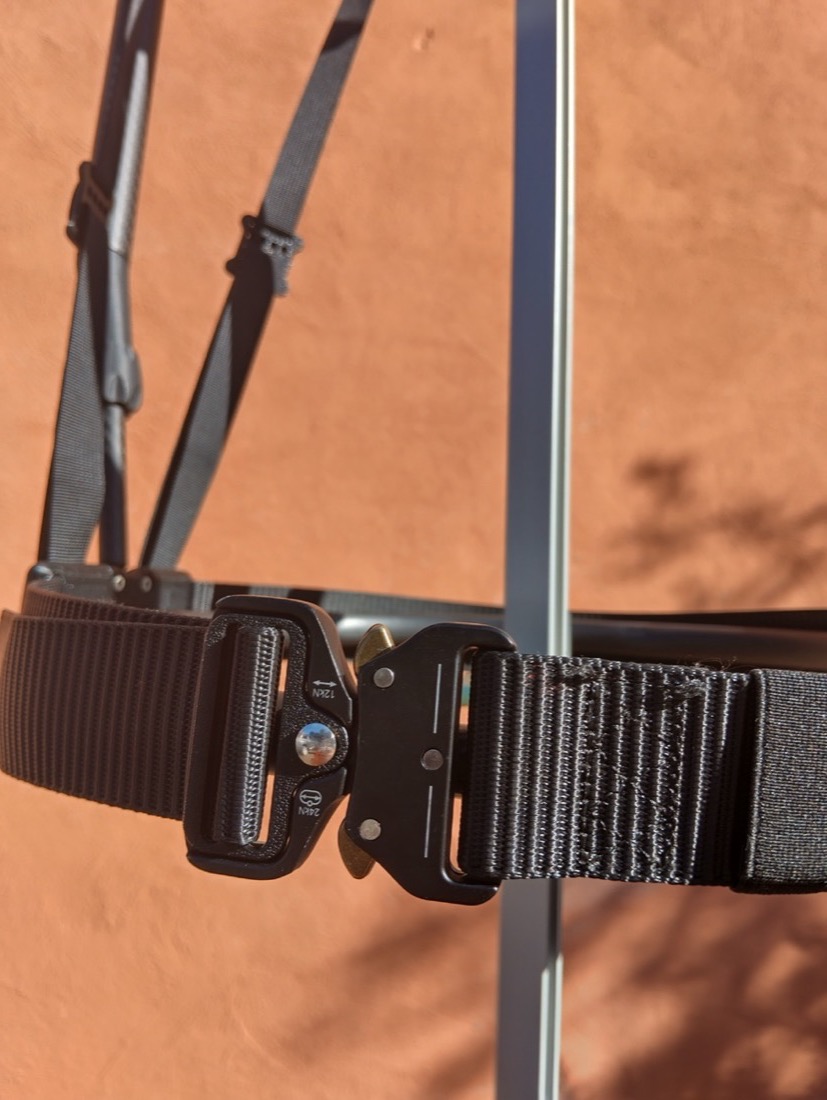
The hip belt closes with one quick-release buckle. There is no motor and no battery.
Measured
The support, measured
At level 4, the highest, with the arm level with the shoulder, the bar that holds the cuff pushes up with 3.5 kg, 27 cm from the device's shoulder joint.
We measured it on one unit on 30 October 2026, with a scale under the bar. The chart shows the whole movement, from the arm hanging down to raised above the shoulder.
The facts
Among the lightest arm exoskeletons
- Weight
- 1.4 kg as worn
- Power
- None. No motor, battery or electronics
- Support levels
- 4, set separately on each arm
- Measured support
- 3.5 kg at level 4, arm level with the shoulder (one unit, see above)
- Arm range
- From the arm hanging down to about 135°
- Fits
- Users 165 to 200 cm tall; cuffs in M and L
- Materials
- Carbon-fibre tubes, anodised aluminium arm links
- Use
- Indoors and outdoors in dry weather, +5 to +30 °C
- Made in
- The European Union
Why Ercura?
A small team with a long road behind it
We know what we do
Our team spent about ten years in a robotics laboratory, beside researchers in work ergonomics. Then we built exoskeletons in an earlier company: for the arms, for the back, and a wearable chair.
We know your needs
With those earlier models we ran pilots and trainings in several industries, from retail and logistics to car and metal plants. We learned why people stop wearing an exoskeleton.
Light and simple
From that we made pisae. It weighs 1.4 kg and has no battery. We developed it with a leading European research institution.
We are here to support
We are a small team in Portugal. We show you pisae and answer your questions ourselves.
For companies and distributors. We can show pisae to your team and let them try it. Write to us to arrange a demonstration.
Ask for a demonstrationOrder pisae
€690 + VAT. Orders are open. We confirm the price, the delivery date and the terms by email before anything is paid.